


ภาษาไทยวันละคำ: เคล็ดลับสู่การเรียนรู้ภาษาไทยอย่างมีประสิทธิภาพ (Thai Word a Day: Effective Tips for Learning Thai)
สวัสดีครับ/ค่ะ! (Sawasdee krap/ka!) Learning a new language can feel like climbing a very steep mountain. The Thai language, with its unique alphabet, tones, and grammar structure, might seem particularly daunting. But trust me, with the right approach, even ‘pai diow dai reu plao?’ (Can you go alone?) will become second nature. Let me tell you a story…
เรื่องเล่าของนักเดินทาง: เส้นทางสู่ความเข้าใจภาษาไทย (A Traveler’s Tale: A Journey to Understanding Thai)
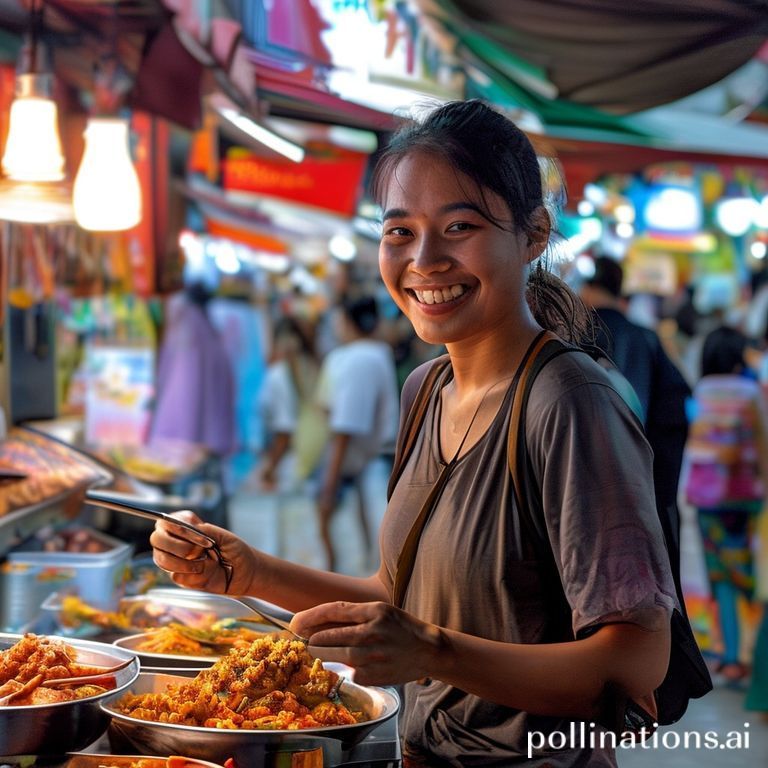
Imagine this: You’re Alex, a digital nomad landing in Bangkok for the first time. The vibrant culture, delicious street food, and friendly smiles are overwhelming, but also incredibly inviting. You try to order pad thai, but all you manage is a jumbled mess of sounds. The vendor smiles politely but clearly doesn’t understand. You feel frustrated, inadequate, and suddenly, Thailand seems a little less welcoming. This is the problem: the initial overwhelm and the fear of miscommunication that often paralyzes new language learners.
คลื่นแห่งความท้อแท้: อุปสรรคในการเรียนรู้ภาษา (The Wave of Discouragement: Obstacles to Language Learning)
The agitation builds. You see other travelers confidently ordering food, bargaining at markets, and laughing with locals. You want to join them, but the language barrier feels insurmountable. You start to doubt yourself: Is Thai too difficult? Am I not good at languages? The pronunciation feels impossible, the grammar rules make no sense, and remembering all those new words is a constant struggle. You try rote memorization, language apps, and expensive textbooks, but nothing seems to stick. The frustration mounts, and you’re tempted to give up entirely and just rely on Google Translate (which, let’s be honest, doesn’t always work!). This cycle of frustration is common, and it can derail even the most motivated learners. The feeling of being an outsider, unable to communicate effectively, can take a real toll on your travel experience.
แสงสว่างที่ปลายอุโมงค์: กลยุทธ์สู่ความสำเร็จในการเรียนภาษาไทย (Light at the End of the Tunnel: Strategies for Successful Thai Language Learning)
But don’t despair! There *is* a solution. Learning Thai, like any language, is a journey, not a destination. It requires patience, persistence, and a strategic approach. The key is to break down the process into manageable steps and focus on consistent progress, not perfection. Here’s a breakdown of effective strategies that will help you navigate the complexities of the Thai language and turn that mountain into a manageable hill:
1. เริ่มต้นด้วยพื้นฐาน: การออกเสียงและตัวอักษร (Start with the Basics: Pronunciation and Alphabet)
Thai has 44 consonants and 15 vowel symbols, which combine to form many vowel sounds. The five tones (Mid, Low, Falling, High, and Rising) drastically change the meaning of a word. Mastering these is crucial from the outset. Don’t just memorize the alphabet; *listen* to native speakers and *imitate* their pronunciation. Use online resources like YouTube videos, language learning apps (Duolingo, Memrise), and pronunciation guides.
- Actionable Step: Dedicate 15-20 minutes each day to practicing pronunciation. Record yourself and compare it to native speakers. Pay close attention to the tones.
2. เรียนรู้คำศัพท์และวลีพื้นฐาน: สร้างรากฐานที่แข็งแกร่ง (Learn Basic Vocabulary and Phrases: Build a Strong Foundation)
Focus on the most common words and phrases used in everyday conversations. Start with greetings, introductions, basic questions, and common verbs. Flashcards, spaced repetition software (SRS), and vocabulary apps can be invaluable tools. Context is key – try to learn words in sentences and scenarios.
- Actionable Step: Create a list of 5-10 new Thai words and phrases each day and use them in sentences. Practice these sentences throughout the day.
3. ดำดิ่งสู่ไวยากรณ์: ทำความเข้าใจโครงสร้างของภาษา (Dive into Grammar: Understand the Structure of the Language)
Thai grammar is relatively simple compared to some European languages. There are no verb conjugations for tense, and word order is generally Subject-Verb-Object (SVO). However, understanding particles and classifiers is important. Don’t get bogged down in complex grammar rules at first. Focus on the essential concepts and gradually build your understanding.
- Actionable Step: Find a good Thai grammar book or online course and work through it systematically. Pay attention to word order, particles, and classifiers.
4. ฝึกฝนการฟัง: ปรับหูให้เข้ากับภาษาไทย (Practice Listening: Tune Your Ear to Thai)
Listening comprehension is essential for understanding spoken Thai. Expose yourself to Thai audio and video content as much as possible. Start with simplified materials like children’s songs or language learning podcasts. Gradually move on to more complex content like Thai movies, TV shows, and news broadcasts. Don’t worry if you don’t understand everything at first; the goal is to get used to the sounds and rhythm of the language.
- Actionable Step: Listen to a Thai podcast or watch a Thai TV show for 30 minutes each day. Even if you only understand a few words, you’re still improving your listening comprehension.
5. ฝึกฝนการพูด: อย่ากลัวที่จะทำผิด (Practice Speaking: Don’t Be Afraid to Make Mistakes)
The only way to improve your speaking skills is to practice! Find a language partner, join a conversation group, or take online lessons with a Thai tutor. Don’t be afraid to make mistakes; they are a natural part of the learning process. Focus on communicating your message effectively, even if your grammar isn’t perfect.
- Actionable Step: Find a Thai language partner and practice speaking for at least 30 minutes each week. Focus on conversation and don’t worry too much about grammar.
6. ดื่มด่ำวัฒนธรรม: เรียนรู้ภาษาผ่านบริบททางวัฒนธรรม (Immerse Yourself in the Culture: Learn the Language Through Cultural Context)
Language and culture are intertwined. Understanding Thai culture will help you understand the nuances of the language. Learn about Thai customs, traditions, and values. Explore Thai cuisine, music, and art. Read Thai books and watch Thai movies. The more you immerse yourself in the culture, the easier it will be to learn the language.
- Actionable Step: Watch a Thai movie with subtitles. Pay attention to the dialogue and try to understand the cultural context.
7. ใช้ประโยชน์จากเทคโนโลยี: แอปและเครื่องมือออนไลน์เพื่อการเรียนรู้ (Leverage Technology: Language Learning Apps and Online Tools)
There are countless language learning apps and online tools available to help you learn Thai. Duolingo, Memrise, Anki, and ThaiPod101 are just a few examples. Experiment with different tools and find the ones that work best for you. Use these tools to supplement your other learning activities.
- Actionable Step: Download a Thai language learning app and use it for 15 minutes each day.
8. ความสม่ำเสมอคือกุญแจสำคัญ: อดทนและอย่าท้อแท้ (Consistency is Key: Be Patient and Don’t Give Up)
Learning a language takes time and effort. There will be days when you feel frustrated or discouraged. Don’t give up! Remember why you started learning Thai in the first place. Celebrate your progress, no matter how small. The key is to be consistent and keep practicing, even when you don’t feel like it. Set realistic goals and reward yourself for achieving them.
- Actionable Step: Set a realistic goal for your Thai language learning and track your progress. Reward yourself when you achieve your goals.
กลับไปที่อเล็กซ์: นักเดินทางที่พูดภาษาไทยได้ (Back to Alex: A Thai-Speaking Traveler)
Remember Alex, the overwhelmed digital nomad? Imagine him now, a few months later. He’s confidently ordering his favorite pad thai, chatting with locals about their families, and even haggling for souvenirs at the market. He’s still making mistakes, but he doesn’t let them hold him back. He embraces the learning process and enjoys the journey. He’s no longer just a tourist; he’s an active participant in Thai culture.
Learning Thai is an investment in yourself and your experiences. It opens doors to new cultures, new relationships, and new opportunities. So, take a deep breath, embrace the challenge, and start your Thai language learning journey today! ‘โชคดี!’ (Chok dee! – Good luck!)
แท็กยอดนิยม:
#เรียนภาษาไทย #ThaiLanguage #ภาษาไทยวันละคำ #ฝึกภาษาไทย #LearnThai #ThaiVocabulary #ThaiPronunciation #ThaiCulture
You May Also Like
![{"prompt":"A visually appealing photograph featuring a close-up of open Thai language textbook with a traditional Thai market scene in the background, symbolizing learning and immersion in Thai culture. Happy student with a smile, holding the book. Warm lighting, high resolution.","originalPrompt":"A visually appealing photograph featuring a close-up of open Thai language textbook with a traditional Thai market scene in the background, symbolizing learning and immersion in Thai culture. Happy student with a smile, holding the book. Warm lighting, high resolution.","width":1024,"height":1024,"seed":14850,"model":"sana","enhance":false,"nologo":false,"negative_prompt":"undefined","nofeed":false,"safe":false,"quality":"medium","image":[],"transparent":false,"has_nsfw_concept":false,"concept":[],"trackingData":{"actualModel":"sana","usage":{"completionImageTokens":1,"totalTokenCount":1}}}](https://selfpreneur.club/wp-content/uploads/2026/01/cover-363-820x430.jpg "cover-363")
-
ม.ค. 29, 2026
เรียนรู้การใช้ภาษาไท...
![{"prompt":"Photorealistic, close-up shot of an assortment of vibrant Thai ingredients artfully arranged on a rustic wooden table. Include chilies, lemongrass, galangal, kaffir lime leaves, fish sauce, palm sugar, and a mortar and pestle. Soft, natural lighting with shallow depth of field to emphasize the freshness of the components. The overall mood should be warm, inviting, and illustrative of traditional Thai culinary practices.","originalPrompt":"Photorealistic, close-up shot of an assortment of vibrant Thai ingredients artfully arranged on a rustic wooden table. Include chilies, lemongrass, galangal, kaffir lime leaves, fish sauce, palm sugar, and a mortar and pestle. Soft, natural lighting with shallow depth of field to emphasize the freshness of the components. The overall mood should be warm, inviting, and illustrative of traditional Thai culinary practices.","width":1024,"height":1024,"seed":14789,"model":"sana","enhance":false,"nologo":false,"negative_prompt":"undefined","nofeed":false,"safe":false,"quality":"medium","image":[],"transparent":false,"has_nsfw_concept":false,"concept":[],"trackingData":{"actualModel":"sana","usage":{"completionImageTokens":1,"totalTokenCount":1}}}](https://selfpreneur.club/wp-content/uploads/2026/01/cover-362-820x430.jpg "cover-362")
-
ม.ค. 29, 2026
การเดินทางสู่ใจกลางอ...
![{"prompt":"Photorealistic image of a smiling person studying Thai language materials, such as a textbook, apps, and flashcards, with a Thai flag in the background. The scene should depict a positive and encouraging learning environment.","originalPrompt":"Photorealistic image of a smiling person studying Thai language materials, such as a textbook, apps, and flashcards, with a Thai flag in the background. The scene should depict a positive and encouraging learning environment.","width":1024,"height":1024,"seed":14728,"model":"sana","enhance":false,"nologo":false,"negative_prompt":"undefined","nofeed":false,"safe":false,"quality":"medium","image":[],"transparent":false,"has_nsfw_concept":false,"concept":[],"trackingData":{"actualModel":"sana","usage":{"completionImageTokens":1,"totalTokenCount":1}}}](https://selfpreneur.club/wp-content/uploads/2026/01/cover-361-820x430.jpg "cover-361")
-
ม.ค. 29, 2026
5 เคล็ดลับสู่ความสำเ...
![{"prompt":"Photorealistic cover image depicting a friendly conversation between a tourist and a Thai local at a vibrant Thai market. The tourist is attempting to order food in Thai, and the local is smiling and helping them. The background should show bustling market activity with colorful fruits, vegetables, and Thai street food.","originalPrompt":"Photorealistic cover image depicting a friendly conversation between a tourist and a Thai local at a vibrant Thai market. The tourist is attempting to order food in Thai, and the local is smiling and helping them. The background should show bustling market activity with colorful fruits, vegetables, and Thai street food.","width":1024,"height":1024,"seed":14604,"model":"sana","enhance":false,"nologo":false,"negative_prompt":"undefined","nofeed":false,"safe":false,"quality":"medium","image":[],"transparent":false,"has_nsfw_concept":false,"concept":[],"trackingData":{"actualModel":"sana","usage":{"completionImageTokens":1,"totalTokenCount":1}}}](https://selfpreneur.club/wp-content/uploads/2026/01/cover-359-820x430.jpg "cover-359")
-
ม.ค. 29, 2026
เรียนภาษาไทย: คู่มือ...
Sign up to receive our latest updates
Get in touch
Call us directly?
+1 234 567 8910
Address
Howard Street, San Francisco
contact@eduma.com