
เรียนภาษาไทย: คู่มือฉบับสมบูรณ์สำหรับผู้เริ่มต้น (Reian Phasa Thai: Khū̀meū Chabàb Sombūrn Sàmpràb Phū̀ Rūeaàton)
สวัสดีครับ/ค่ะ! (Sawàt dī khráp/khà!) Welcome! Learning a new language can feel like climbing a very tall mountain. You see the peak, you know you want to get there, but the path ahead looks steep and daunting. Many people starting to learn Thai face the same feeling.
เรื่องที่หนึ่ง: การเริ่มต้นที่ยากลำบาก (Rēūang Thī̀ Nùng: Gān Roēm Tôn Thī̀ Yàg Lāmbàag)
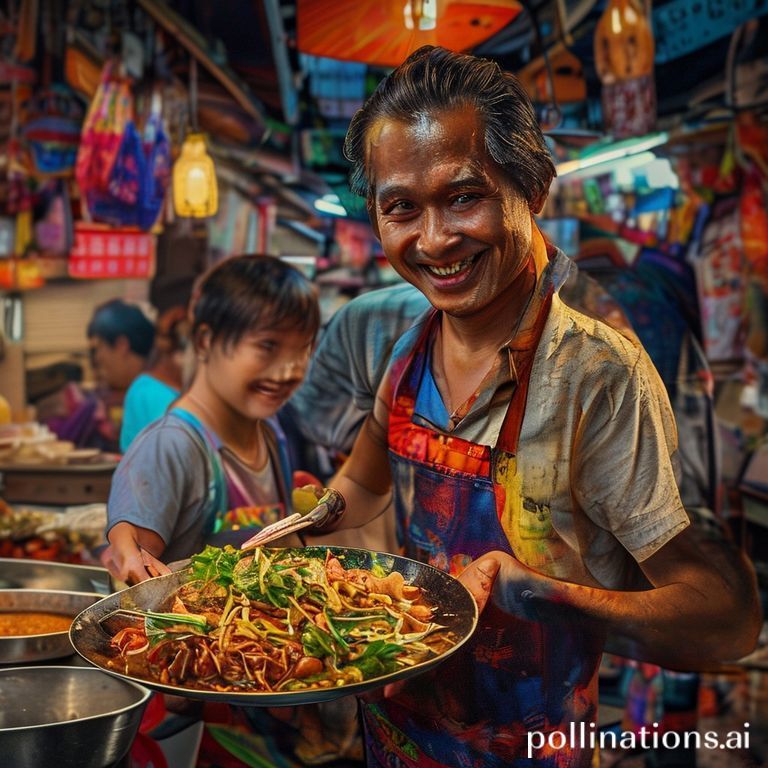
Imagine this: you arrive in vibrant Bangkok, the city of smiles. You’re surrounded by delicious smells, bustling markets, and the mesmerizing sounds of Thai. You want to order a Pad Thai, but all you can manage is a mumbled “Pad Thai…please?” The vendor smiles politely but responds in rapid Thai. You feel a wave of frustration. You wish you could connect, understand, and experience Thailand on a deeper level. This is a common problem for new learners.
ปัญหา: ความซับซ้อนของภาษาไทย (Pan̆hā: Khwāam Sáp Sórn Khōng Phāsā Thai)
The problem is multifaceted. The Thai alphabet, with its seemingly endless swirls and symbols, can feel impossible to decipher. The tonal nature of the language means that one word can have multiple meanings depending on the pitch. And the grammatical structure, while having no verb conjugations, uses particles and sentence structures that are unlike anything you might be familiar with. Many new learners get discouraged by these challenges and give up before they even truly begin.
ความยุ่งยาก: ตัวอักษร, โทน, และไวยากรณ์ (Khwāam Yûng Yàag: Tūa Aksǒn, Tōn, Laée Waiyāgorn)
- ตัวอักษรไทย (Tūa Aksǒn Thai): A completely new writing system with 44 consonants and 15 vowel symbols that combine in various ways.
- ระบบเสียงวรรณยุกต์ (Rabop Sĭang Wannayúk): Thai has five tones: mid, low, falling, high, and rising. Mastering these tones is crucial for accurate pronunciation.
- ไวยากรณ์ (Waiyāgorn): Sentence structure generally follows Subject-Verb-Object. Thai also relies heavily on particles to add nuance and meaning.
ทางออก: คู่มือฉบับสมบูรณ์สำหรับผู้เริ่มต้น (Thaang Òk: Khū̀meū Chabàb Sombūrn Sàmpràb Phū̀ Rūeaàton)
But don’t despair! Learning Thai is definitely achievable, and with the right approach, it can even be enjoyable. This comprehensive guide is designed to help you navigate the complexities of the Thai language and get you speaking confidently in no time. We’ll break down the alphabet, demystify the tones, and provide practical tips for mastering grammar and vocabulary.
ก้าวแรก: เรียนรู้อักษรไทย (Gâao Râek: Reian Rûu Aksǒn Thai)
Start with the alphabet. Focus on learning a few consonants and vowels each day. Use flashcards, online resources, and handwriting practice to reinforce your learning. Don’t try to memorize everything at once. Consistency is key.
Tips:
- Use mnemonics to remember the shapes and sounds of the letters.
- Find a good online Thai alphabet chart with audio pronunciation.
- Practice writing the letters – muscle memory is important!
การฝึกออกเสียง: โทนสำคัญ (Gān Frùg Òg Sĭang: Tōn Sàankan)
Tones are crucial. Use audio resources to listen to native speakers and mimic their pronunciation. Record yourself speaking Thai and compare it to the native speakers. Pay attention to the subtle differences in pitch.
Tools:
- Forvo.com: A great resource for listening to native speakers pronounce words.
- YouTube: Search for “Thai pronunciation” videos.
- ThaiPod101: Offers audio lessons and pronunciation exercises.
สร้างคำศัพท์: คำง่ายๆ ที่ใช้บ่อย (Sâang Khamsàb: Kham Ngâai Ngâai Thîi Chai Bòi Bòi)
Start with basic vocabulary related to everyday situations: greetings, numbers, food, directions. Focus on learning words that you can immediately use in conversations. Use flashcards, language learning apps, and create your own vocabulary lists.
Essential words:
- สวัสดี (Sawàt dī): Hello/Goodbye
- ขอบคุณ (Khòp khun): Thank you
- ใช่ (Châi): Yes
- ไม่ใช่ (Mâi châi): No
- เท่าไหร่ (Thâo raì): How much?
ไวยากรณ์เบื้องต้น: โครงสร้างประโยคพื้นฐาน (Waiyāgorn Beūang Tôn: Khrohng Sâang Prayòok Phúuenthăan)
Understand the basic sentence structure: Subject-Verb-Object. Learn how to form simple sentences using pronouns, verbs, and nouns. Practice using particles like ครับ/ค่ะ (khráp/khà) to add politeness.
Example sentences:
- ผม/ฉัน ชื่อ… (Phǒm/Chǎn chư̂o…): My name is… (ผม for male, ฉัน for female)
- ผม/ฉัน กินข้าว (Phǒm/Chǎn gin khâao): I eat rice.
- ผม/ฉัน ไปตลาด (Phǒm/Chǎn bpaì dtalàat): I go to the market.
การสนทนา: ฝึกพูดตั้งแต่เริ่มต้น (Gān Sonatànaa: Frùg Phûut Tàng Taè Roēm Tôn)
Don’t be afraid to speak, even if you make mistakes. Find a language partner, join a conversation group, or simply practice speaking to yourself. The more you speak, the more confident you’ll become. Focus on communicating, not perfection.
Tips for finding language partners:
- HelloTalk app
- Tandem app
- Language exchange websites
ดื่มด่ำวัฒนธรรม: เรียนรู้ไปพร้อมกับสนุก (Dèuem Dàm Watthanatham: Reian Rûu Bpai Phróm Gàb Sanùg)
Immerse yourself in Thai culture. Watch Thai movies and TV shows, listen to Thai music, and try cooking Thai food. Understanding the culture will enhance your language learning experience and make it more enjoyable.
ทรัพยากรเพิ่มเติม: เว็บไซต์และแอปที่มีประโยชน์ (Tráp Yāgān Phêrm Dterm: Wép Siteh Laée Aep Thîi Mee Prayòot)
There are many great resources available to help you learn Thai. Explore different websites, apps, and textbooks to find what works best for you.
- Applications: Duolingo, Memrise, ThaiPod101
- Websites: Learn Thai with Mod, Paiboon Publishing
บทสรุป: ความสำเร็จในการเรียนรู้ภาษาไทย (Bot Sarăb: Khwāam Sàmrèt Nai Gān Reian Rûu Phāsā Thai)
Learning Thai takes time and effort, but it is a rewarding experience. By breaking down the language into manageable steps, practicing consistently, and immersing yourself in the culture, you can achieve fluency and unlock a whole new world of opportunities. Don’t be afraid to make mistakes, embrace the challenges, and have fun along the way!
So, go forth, embrace the challenge, and start your Thai language learning journey today! ขอให้โชคดี! (Khǒr hâi chohk dī!) Good luck!
แท็กยอดนิยม:
#เรียนภาษาไทย #ภาษาไทยเบื้องต้น #เรียนภาษาไทยออนไลน์ #ฝึกภาษาไทย #LearnThai #ThaiLanguage #ThaiForBeginners #SpeakThai
You May Also Like
![{"prompt":"A photorealistic and vibrant cover image of several popular Thai dishes beautifully arranged on a wooden table, including Pad Thai, Tom Yum Goong, Green Curry, and Mango Sticky Rice. The dishes should be steaming slightly, indicating they are freshly made. Background includes traditional Thai decorations and elements emphasizing the richness and appeal of Thai cuisine. Bright, inviting, and mouthwatering.","originalPrompt":"A photorealistic and vibrant cover image of several popular Thai dishes beautifully arranged on a wooden table, including Pad Thai, Tom Yum Goong, Green Curry, and Mango Sticky Rice. The dishes should be steaming slightly, indicating they are freshly made. Background includes traditional Thai decorations and elements emphasizing the richness and appeal of Thai cuisine. Bright, inviting, and mouthwatering.","width":1024,"height":1024,"seed":17665,"model":"sana","enhance":false,"nologo":false,"negative_prompt":"undefined","nofeed":false,"safe":false,"quality":"medium","image":[],"transparent":false,"has_nsfw_concept":false,"concept":[],"trackingData":{"actualModel":"sana","usage":{"completionImageTokens":1,"totalTokenCount":1}}}](https://selfpreneur.club/wp-content/uploads/2026/01/cover-409-820x430.jpg "cover-409")
-
ม.ค. 31, 2026
อาหารไทย: สวรรค์แห่ง...
![{"prompt":"Photorealistic image of a Thai person smiling while pointing at a glowing stock chart on a tablet. The background is the Bangkok city skyline at dusk, subtly blurred. Elements like a bull and bear subtly incorporated. Warm and inviting color palette.","originalPrompt":"Photorealistic image of a Thai person smiling while pointing at a glowing stock chart on a tablet. The background is the Bangkok city skyline at dusk, subtly blurred. Elements like a bull and bear subtly incorporated. Warm and inviting color palette.","width":1024,"height":1024,"seed":17604,"model":"sana","enhance":false,"nologo":false,"negative_prompt":"undefined","nofeed":false,"safe":false,"quality":"medium","image":[],"transparent":false,"has_nsfw_concept":false,"concept":[],"trackingData":{"actualModel":"sana","usage":{"completionImageTokens":1,"totalTokenCount":1}}}](https://selfpreneur.club/wp-content/uploads/2026/01/cover-408-820x430.jpg "cover-408")
-
ม.ค. 31, 2026
รู้จักการลงทุนในตลาด...
![{"prompt":"A visually appealing, photorealistic image depicting a person calmly organizing their schedule with a digital tablet, surrounded by calming elements llike a plant and a cup of coffee. The overall mood should convey a sense of control, balance, and productivity.","originalPrompt":"A visually appealing, photorealistic image depicting a person calmly organizing their schedule with a digital tablet, surrounded by calming elements llike a plant and a cup of coffee. The overall mood should convey a sense of control, balance, and productivity.","width":1024,"height":1024,"seed":17543,"model":"sana","enhance":false,"nologo":false,"negative_prompt":"undefined","nofeed":false,"safe":false,"quality":"medium","image":[],"transparent":false,"has_nsfw_concept":false,"concept":[],"trackingData":{"actualModel":"sana","usage":{"completionImageTokens":1,"totalTokenCount":1}}}](https://selfpreneur.club/wp-content/uploads/2026/01/cover-407-820x430.jpg "cover-407")
-
ม.ค. 31, 2026
การจัดการเวลา: กุญแจ...
![{"prompt":"A photorealistic image showing a Thai person joyfully pointing at a laptop screen displaying a website ranking high on Google search results. The background should depict a vibrant and bustling Thai market scene, symbolizing the success and growth of the business due to effective SEO strategies. The laptop screen should clearly show the Google search results with the website prominently displayed in the top position. Include elements of Thai culture and tradition in the background to emphasize the location.","originalPrompt":"A photorealistic image showing a Thai person joyfully pointing at a laptop screen displaying a website ranking high on Google search results. The background should depict a vibrant and bustling Thai market scene, symbolizing the success and growth of the business due to effective SEO strategies. The laptop screen should clearly show the Google search results with the website prominently displayed in the top position. Include elements of Thai culture and tradition in the background to emphasize the location.","width":1024,"height":1024,"seed":17482,"model":"sana","enhance":false,"nologo":false,"negative_prompt":"undefined","nofeed":false,"safe":false,"quality":"medium","image":[],"transparent":false,"has_nsfw_concept":false,"concept":[],"trackingData":{"actualModel":"sana","usage":{"completionImageTokens":1,"totalTokenCount":1}}}](https://selfpreneur.club/wp-content/uploads/2026/01/cover-406-820x430.jpg "cover-406")
-
ม.ค. 31, 2026
การทำ SEO ในประเทศไท...
Sign up to receive our latest updates
Get in touch
Call us directly?
+1 234 567 8910
Address
Howard Street, San Francisco
contact@eduma.com